Forget the frameworks for a second.
- Ian Finn on Product Leadership -
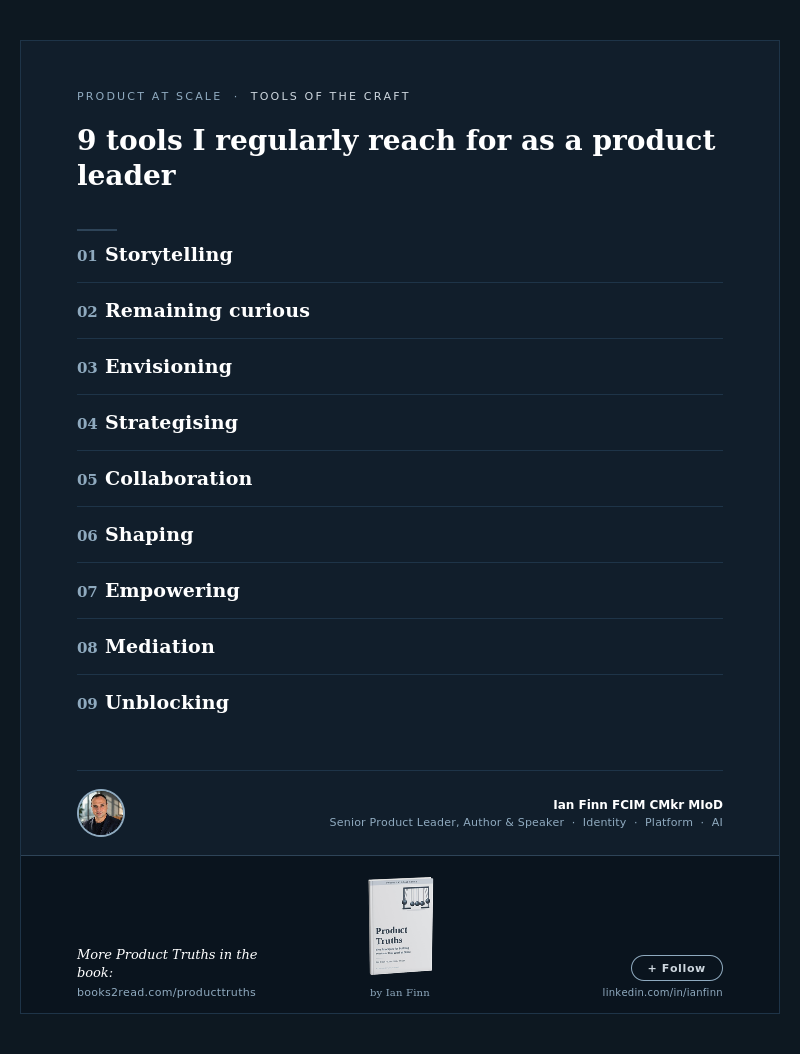
After 18 years leading product at scale — across identity, platforms, and personalisation — these are the 9 things I actually reach for, day to day, before any methodology gets involved:
01. Storytelling
02. Remaining curious
03. Envisioning
04. Strategising
05. Collaboration
06. Shaping
07. Empowering
08.Mediation
09. Unblocking
None of these show up on a certification. All of them show up in the work.

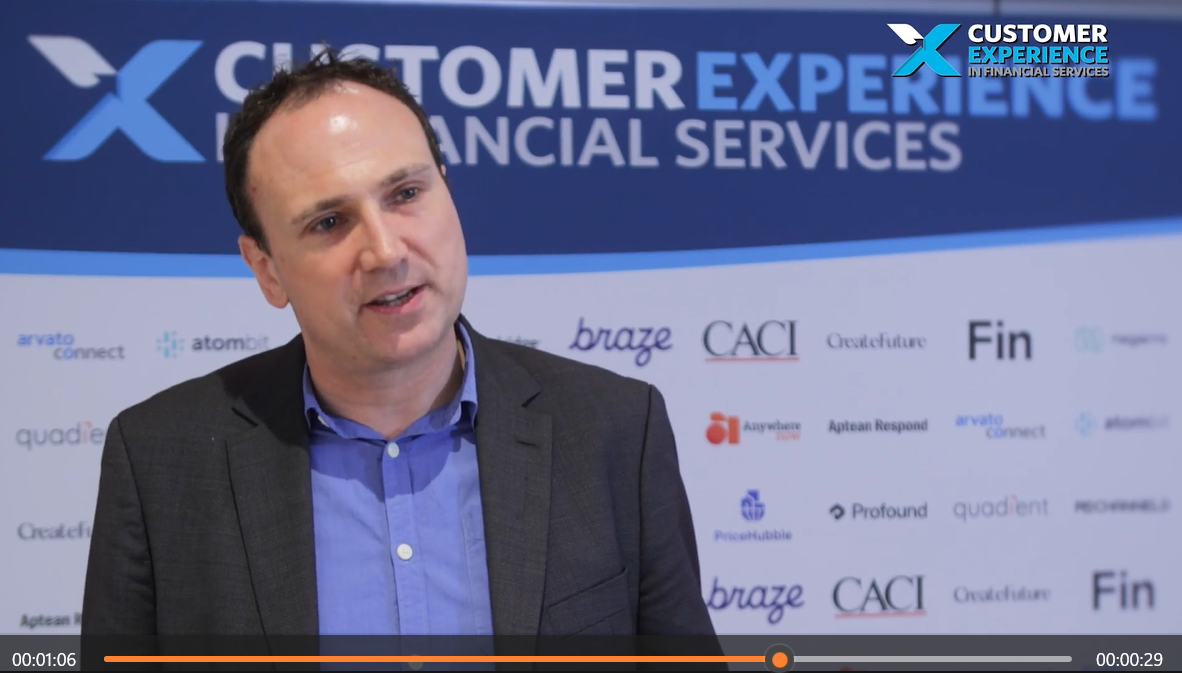
Identity at Scale: Simplicity as the Real Differentiator CXFS26 — Customer Experience in Financial Services, London, 17–18 June 2026
What I Spoke About
At CXFS26 I made the case that identity at scale isn't won through complexity, it's won by stripping it away. Less is more: reducing cognitive load, building familiarity consistently across every channel, and harmonising the systems sitting behind them so the customer never feels the seams. I also explored how "save to invest" and customer experience itself are becoming genuine points of differentiation, not just operational hygiene.
What I Said Afterwards
In the interview that followed, three themes carried through. First, personalisation at scale isn't about boiling the ocean — it's about identifying the two or three data points that actually drive tailored experiences, and ignoring the rest. Second, identity at scale is won through interactions that are secure but effortless, and that remain trustworthy at every touchpoint. Third, AI belongs in the kit as one tool among many — most valuable where its distinct strengths serve use cases that were genuinely underserved before, not as a blanket solution applied everywhere.
[Watch the full interview here →]
https://www.youtube.com/watch?v=H0T3s8hSkwc

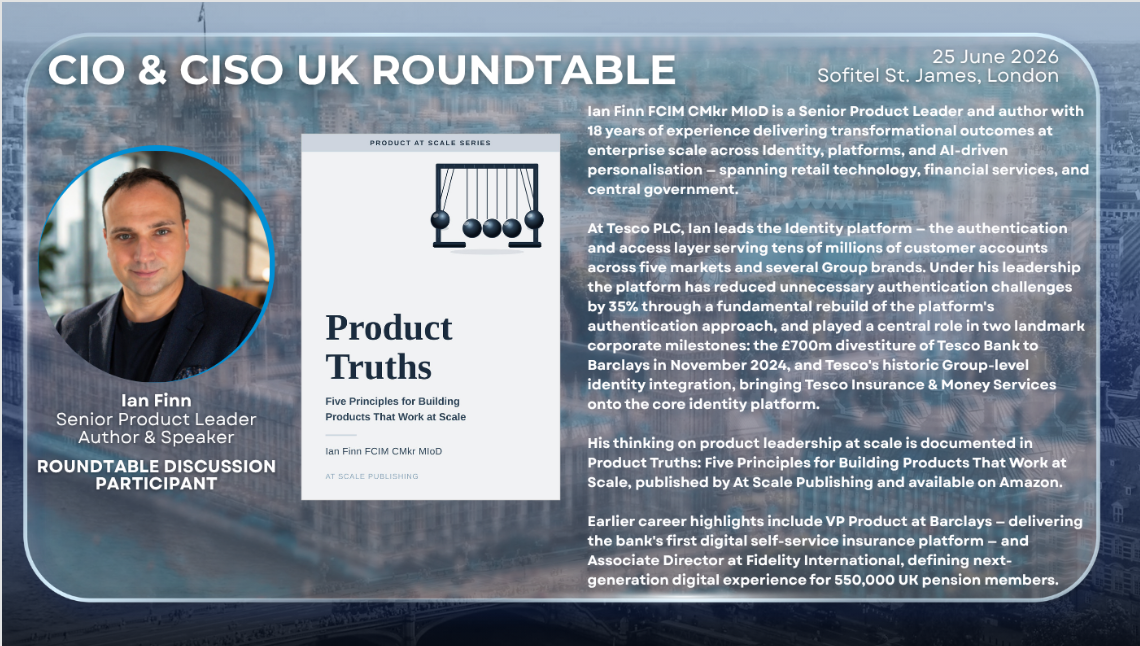
Panelist at CIO & CISO RoundTable, 25.06.26
I’ll be a panelist discussing digital trust and the new risk landscape at the CIO & CISO UK Roundtable in London on 25 June — and delegates will each get a copy of my recently published book Product Truths on the day.
Full details on the site:
https://infoteaminternational.co.uk/events/cio-ciso-uk-roundtable/

Announcement… ‘Product Truths: Five Principles for Building Products That Work at Scale’ — published today

Eighteen years. Nine industry sectors. Millions of users. Five truths that kept surfacing, regardless of sector, organisation or scale.
Today, those truths are published.
Product Truths: Five Principles for Building Products That Work at Scale is the book I wished existed when I was navigating the gap between good product thinking and what it actually takes to deliver at enterprise scale — under pressure, with real consequences, across organisations that don't always pull in the same direction.
It's built around five principles that hold up when the stakes are high and the complexity is real. None of them are technical. All of them are consequential.
The infrastructure that makes great products possible is usually invisible. The outcomes aren't. That's been the thread running through everything I've built — and it's the thread running through this book.
It's available on Amazon at £4.99 via At Scale Publishing. But it’s free to Product at Scale subscribers.
Read it free here → productatscale.substack.com/p/your-free-copy-of-product-truths

Britain's Got Talent — The Team Behind the Magic
Ian Finn on leading technology delivery for Clubcard voting at Britain's Got Talent — real-time infrastructure at live TV scale across six engineering teams.

Ian Finn with the Britain's Got Talent delivery team at the series final — live TV technology partnership
Clubcard voting at live TV scale. Millions of data points. Millions of points awarded. Real-time, every broadcast, across five weeks.
This is the team that made it happen — pictured at the Britain's Got Talent series final. A genuine partnership across technology, broadcast and entertainment, delivering something at a scale and reliability that live television demands.
Leading for technology across six engineering teams, I worked alongside brilliant people to deliver a partnership that reached an average 4.6 million viewers per broadcast — putting real-time technology at the heart of one of the UK's most watched live entertainment formats.
The infrastructure was invisible. The outcome wasn't.
That's the thing about technology at scale: when it works, no one sees it. The voting just happens. The points just land. The experience just flows. And behind that seamlessness sits an enormous amount of engineering, coordination and trust — across organisations, under live pressure, with no second takes.
The best technology is the kind audiences never notice. They just enjoy the moment

Speaking at Customer Experience in Financial Services 2026 — Ian Finn
Speaking at Customer Experience in Financial Services 2026 on Identity as an engine of growth.
Speaking on trust, identity and invisible infrastructure in financial services — and an open invitation to connect if you're there. London, 17-18 June 2026.
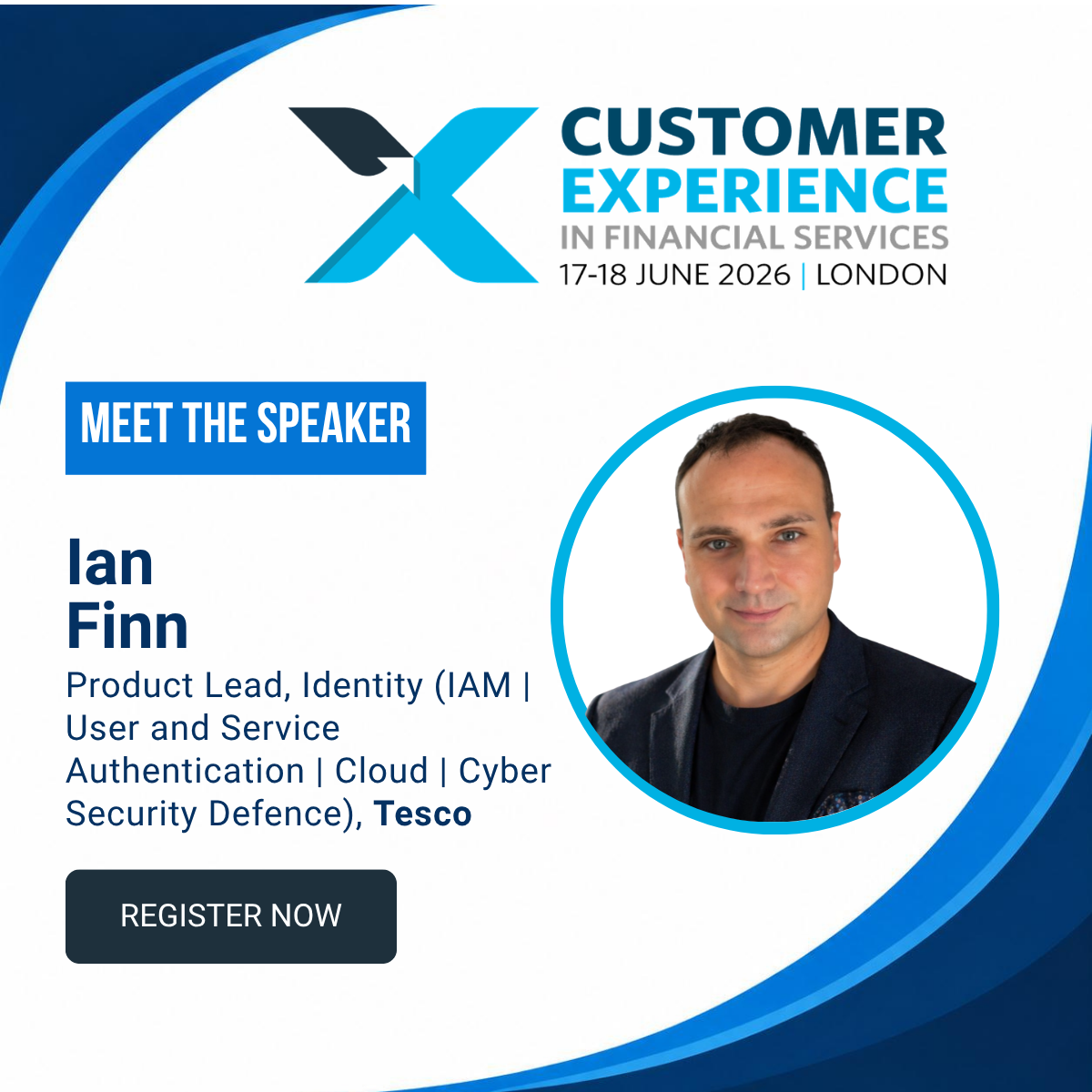
Ian Finn, speaker at Customer Experience in Financial Services 2026, London, 17-18 June — digital identity and IAM
I'm pleased to be speaking at Customer Experience in Financial Services 2026, in London on 17-18 June.
My session looks at digital identity as a strategic lever — not just a security control, but the foundation of consumer trust and the invisible infrastructure behind every seamless customer journey. In financial services especially, the way an organisation handles authentication, trust and access shapes the entire customer relationship, often before the customer is even aware of it.
I'll be drawing on lived experience building and scaling identity platforms in high-trust, high-volume environments — where reliability is non-negotiable and the cost of friction is measured in millions of interactions.
If you're attending, I'd welcome the conversation — whether on identity, platform strategy, AI adoption, or the broader question of how financial services organisations earn and keep customer trust in an increasingly digital world.

Speaking at Surrey Cyber Connect — AI, Security and the Human Factor
Speaking at Surrey Cyber Connect — AI, Security and the Human Factor
23 June 2026 · The Weyside, Surrey
I'll be joining the Surrey Cyber Connect community this month to share thoughts on one of the most pressing questions in enterprise technology right now: how do organisations leverage AI securely, while still capturing the efficiency and competitive benefits it genuinely offers?
The tension between enablement and governance is real. Move too slowly and you cede competitive ground. Move without the right controls and you create exposure that can unwind years of trust — with customers, regulators, and boards alike.
My contribution will focus on what good looks like at the intersection of AI adoption and identity security — drawing on experience building and scaling platforms where these questions aren't theoretical. They're production decisions, made daily, at scale.
If you're in the Surrey area and working through similar questions in your organisation, it would be great to connect.
Sign up here · Hosted by Cyber Vigilance · Sponsored by CultureAI


The best systems disappear into the background…
Systems thinking and platform design when it comes to outdoor cinema
- Ian Finn on Systems Thinking -
Watching Pretty Woman at an outdoor cinema last night (‘Screen on the Lawn’, at @AviatorHampshire), one thing really struck me.
Nobody was talking about the mechanics of the experience.
Not the logistics. Not the audio setup. Not the ticketing. Not the timing, wisely chosen to not co-incide with any noisey event at the adjacent Farnborough airport. Not the technology quietly making the evening work so seamlessly
They were simply immersed.
And it reminded me of something I’ve learned repeatedly in product.
The best systems are often invisible.
Customers rarely notice identity, authentication, fulfilment, trust signals, or personalisation when they work well. They notice friction. They notice failure. They notice effort.
But when systems are thoughtfully designed — when trust feels intuitive, journeys feel seamless, and complexity is removed rather than exposed — the experience simply works.
That’s true of products at scale.
And perhaps true of experiences more broadly.
We often celebrate visible features. But much of the real value lives underneath — in the invisible architecture quietly enabling the moment.
Sometimes the best compliment a platform can receive is:
nobody noticed it at all.
(Photo: sunset outdoor screening at the Aviator Hotel — a reminder that effortless experiences are usually anything but effortless behind the scenes.)
#ProductManagement #CustomerExperience #UX #DigitalTransformation #ProductDesign #CustomerJourney #Innvoation #Trust #SystemsThinking #Leadership


Cited in Change Makers Report on AI, May 2026
Ian FInn cited in Change Makers report on AI adoption, May 2026.
Pleased to have contributed to Cost to Catalyst — a research paper from Change Makers exploring how organisations shift cyber security from budget friction to business acceleration.
My contribution centred on a reframe I believe in: "We need to take this to the board in terms of competitive advantage, not just risk."
As AI moves into production at scale, the organisations getting security right aren't treating it as a compliance exercise. They're treating it as a strategic enabler — embedding governance and controls from day one rather than retrofitting them later.
Full report link here: https://tinyurl.ee/fKLyz
@Change Makers Club
#CyberSecurity #AI #DigitalTransformation #ProductLeadership #ThoughtLeadership


Speaking at the 6th Annual Customer Experience in Financial Services, 2026
Ian Finn speaks on digital identity as a strategic lever for consumer trust at Customer Experience in Financial Services 2026, London, 17-18 June.
17–18 June 2026 · 155 Bishopsgate, London
I'll be joining senior leaders from across UK financial services to present on identity as a strategic lever in customer experience — drawing on real-world lessons from one of the more complex identity integrations in UK retail financial services.
How do you transition millions of customers between identity platforms without them noticing? And what does that teach you about trust, CX, and getting the invisible infrastructure right?
View the event · Speaker profile
#Identity #ProductLeadership #Platforms #CustomerExperience #FinancialServices

I’ll be speaking at this Customer Experience focussed conference next month.

“𝐓𝐞𝐜𝐡 𝐝𝐞𝐛𝐭” 𝐢𝐬 𝐨𝐟𝐭𝐞𝐧 𝐭𝐫𝐞𝐚𝐭𝐞𝐝 𝐥𝐢𝐤𝐞 𝐚𝐧 𝐢𝐧𝐞𝐯𝐢𝐭𝐚𝐛𝐢𝐥𝐢𝐭𝐲. 𝐈𝐭 𝐢𝐬𝐧’𝐭.
Tech debt
Leaning into the perpetual dilema of Tech Debt
Most tech debt isn’t a technical problem — it’s a decision-making problem.
We chose to optimise for speed. We chose to defer. And we often choose not to address it until it becomes a constraint.
𝐈𝐧 𝐩𝐫𝐚𝐜𝐭𝐢𝐜𝐞, 𝐭𝐡𝐞 𝐭𝐞𝐚𝐦𝐬 𝐭𝐡𝐚𝐭 𝐦𝐚𝐧𝐚𝐠𝐞 𝐢𝐭 𝐰𝐞𝐥𝐥 𝐝𝐨 𝐭𝐡𝐫𝐞𝐞 𝐭𝐡𝐢𝐧𝐠𝐬 𝐜𝐨𝐧𝐬𝐢𝐬𝐭𝐞𝐧𝐭𝐥𝐲:
• They budget for it deliberately — ~15–20% of sprint capacity isn’t “nice to have”, it’s a guardrail
• They quantify it in business terms — cost of delay, lost optionality, slower delivery
• They address root causes — legacy dependencies, capacity constraints, or weak estimation discipline
𝐈𝐟 𝐭𝐞𝐜𝐡 𝐝𝐞𝐛𝐭 𝐤𝐞𝐞𝐩𝐬 𝐚𝐜𝐜𝐮𝐦𝐮𝐥𝐚𝐭𝐢𝐧𝐠, 𝐢𝐭’𝐬 𝐫𝐚𝐫𝐞𝐥𝐲 𝐛𝐚𝐝 𝐥𝐮𝐜𝐤. 𝐈𝐭’𝐬 𝐚 𝐬𝐢𝐠𝐧𝐚𝐥.
Because eventually, every organisation reaches the same point:
You either invest in paying down tech debt deliberately — or you pay for it later through slower delivery, weaker resilience, and lost opportunities.
At that stage, tech debt is no longer a code problem.
It’s a leadership choice.
And like any unmanaged debt, the interest compounds over time.
𝑊ℎ𝑎𝑡’𝑠 𝑦𝑜𝑢𝑟 𝑒𝑥𝑝𝑒𝑟𝑖𝑒𝑛𝑐𝑒 — ℎ𝑎𝑠 𝑡𝑒𝑐ℎ 𝑑𝑒𝑏𝑡 𝑖𝑛 𝑦𝑜𝑢𝑟 𝑜𝑟𝑔𝑎𝑛𝑖𝑠𝑎𝑡𝑖𝑜𝑛 𝑏𝑒𝑒𝑛 𝑡𝑟𝑒𝑎𝑡𝑒𝑑 𝑎𝑠 𝑎𝑛 𝑒𝑛𝑔𝑖𝑛𝑒𝑒𝑟𝑖𝑛𝑔 𝑖𝑠𝑠𝑢𝑒, 𝑜𝑟 𝑎 𝑏𝑢𝑠𝑖𝑛𝑒𝑠𝑠 𝑜𝑛𝑒?
#ProductAtScale#ProductLeadership#ProductStrategy#TechDebt#DigitalTransformation#B2C#Platform
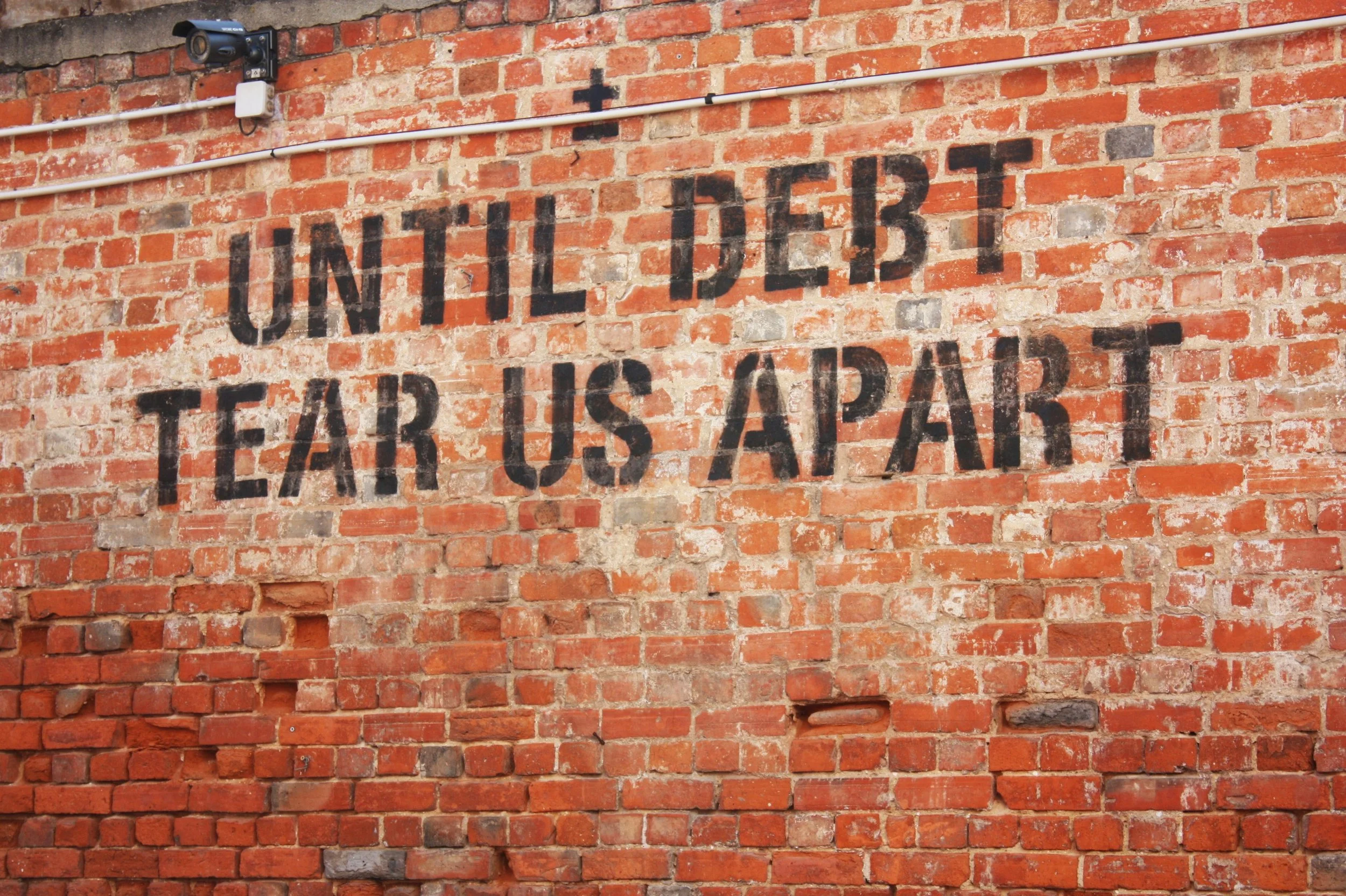
𝑃ℎ𝑜𝑡𝑜 𝑏𝑦 𝐽𝑢𝑙𝑖𝑒 𝑅𝑖𝑐𝑎𝑟𝑑 on Unsplash

𝗦𝗼𝗺𝗲 𝗱𝗮𝘆𝘀 𝗿𝗲𝗺𝗶𝗻𝗱 𝘆𝗼𝘂 𝘄𝗵𝘆 𝘁𝗵𝗲 𝘄𝗼𝗿𝗸 𝘁𝗿𝘂𝗹𝘆 𝗺𝗮𝘁𝘁𝗲𝗿𝘀
Cyber Security thought leadership in a day of fast cars and fast minds
This week I joined a group of senior security and technology leaders at Mercedes-Benz World — for a CISO thought leadership day where the thinking was as fast as the cars.
(𝘉𝘰𝘯𝘶𝘴 𝘱𝘰𝘪𝘯𝘵𝘴 𝘪𝘧 𝘺𝘰𝘶 𝘤𝘢𝘯 𝘯𝘢𝘮𝘦 𝘵𝘩𝘦 𝘤𝘢𝘳 𝘪𝘯 𝘵𝘩𝘦 𝘱𝘩𝘰𝘵𝘰.)
The real value wasn't the cars. It was the room.
What CISOs are actually thinking about in 2026 isn't what most product leaders assume. The conversation kept returning to the same intersection: identity, AI, and trust. Supported by products, processes, people. Not as separate disciplines or disparate concerns — but as a single, increasingly urgent challenge. Who is accessing your systems? How do you know? And as AI lowers the cost of impersonation to near zero — how confident are you in your answer?
These are product problems as much as they are security problems. And the organisations solving them well are the ones where product and security leadership speak the same language. In the same room.
Grateful to have been in that room.
Thanks to @jamesthatcher @josspiggot @ethanrobinson @JamesKavanagh @jamesduggan — it was certainly a day of James's (a new collective noun for James' clearly needed!) — for your kind hospitality and making the day so engaging.
>𝘛𝘩𝘰𝘶𝘨𝘩𝘵:
𝘞𝘩𝘢𝘵'𝘴 𝘵𝘩𝘦 𝘪𝘥𝘦𝘯𝘵𝘪𝘵𝘺 𝘰𝘳 𝘈𝘐 𝘤𝘩𝘢𝘭𝘭𝘦𝘯𝘨𝘦 𝘬𝘦𝘦𝘱𝘪𝘯𝘨 𝘺𝘰𝘶𝘳 𝘵𝘦𝘢𝘮 𝘶𝘱 𝘢𝘵 𝘯𝘪𝘨𝘩𝘵 𝘳𝘪𝘨𝘩𝘵 𝘯𝘰𝘸?
#CyberSecurity #ProductAtScale #ProductLeadership #Identity


My deeper writing has moved
My writing has moved to substack. See:
https://productatscale.substack.com/
My deeper writing has moved to Product at Scale, on Substack:
https://productatscale.substack.com/
A members media channel - my ‘perspectives’ writing can still be found here, on ianfinn.co.uk

Ian Finn now writes on substack.com
Great evening last night at #ProductTank, London
A great evening of talks last night at #ProductTank, London.
The theme for the night was 'how to develop products when your customer is not your user'. Fascinating perspectives from all three speakers. Interesting thoughts also on the backlog:
'the backlog is your enemy - eliminate it every 90 days, and start anew'.
#ProductManagement #digitaldesign

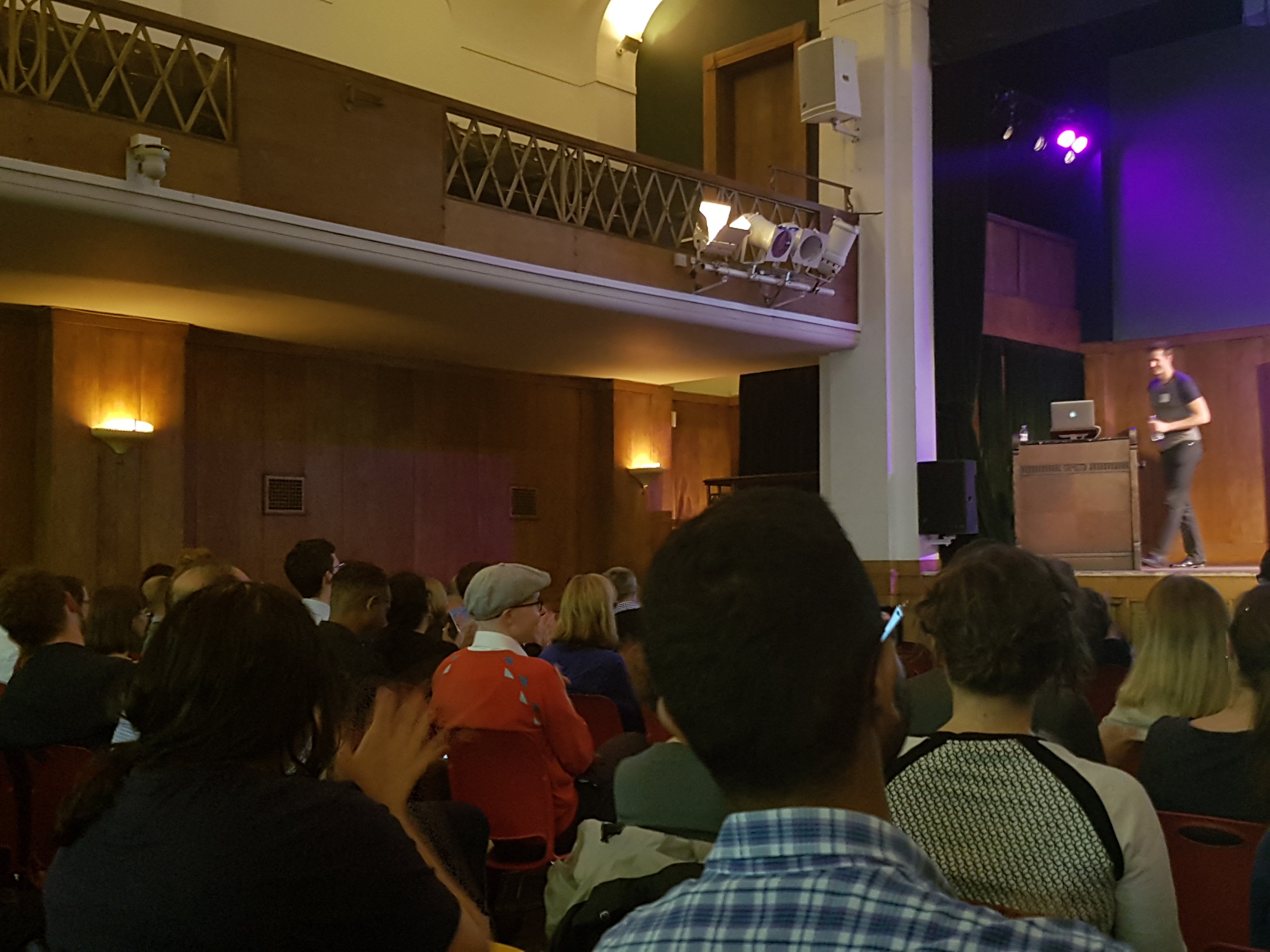
#ProductTank
Successful launch of cutting-edge CRM for government (Department of International Trade)
Delighted to have launched my latest government project this week.
A new, global in-house CRM with cutting-edge capabilities for the Department of International Trade (DIT). Great team effort from Team Data!
Great work guys... we got there. Like we always said we would!


It's great to meet fellow Digital Enthusiasts!
A very enjoyable evening last Friday, meeting fellow digital/ service design-focussed people - at Silicon Guildford event. Made all the more enjoyable by one member bringing his rather endearing Husky along for the ride! Thanks to #Cressive for sponsoring the evening. #SiliconDrinkabout, #DigitalHusky


Does your brand have a critical 'experience gap'?
As we approach the end of 2016, we are now firmly in what Forester have called The Age of the Customer. We are living in a time where highly-informed and digitally-literate (and therefore empowered) customers, and not brands, are now holding the realbalance of power in the brand-customer relationship.
What’s more (as an increasing number of company boards are realising), having a truly-customer centric experience, across a brand’s full range of touchpoints, makes a tangible impact to the bottom line.
So it can be more than a little surprising for a brand’s customer base when they stumble upon a glaring ‘experience gap’ in that brand’s service, proposition or experience (or combination of these).
Yet, as you might expect, such critical experience gaps still do exist - and often where a customer might least expect to find them.
Let’s look at couple of key user cases…
1. “Do you take Contactless?”
In the Age of the Customer (in which customers are increasingly accustomed to product consideration/ transactional/service friction being removed or mitigated by the efforts of brands) when they do hit upon such friction, it can lead to significant detrimental customer sentiment. And sometimes, this detrimental impact can even ripple across an entire service ecosystem.
Take for instance the area of retail payments: a key area of CX in which brands (both retailers and the payments industry) have sought to reduce friction in the transaction – especially via contactless payments. We Brits love the ease of use and fluidity of contactless payments at the point of sale: with contactless now topping over 300 millon transactions per year (over £2 billion pounds worth).
So, what happens when a customer hits a ‘brick wall’ in a shop or restaurant, when looking to simply ‘tap and go’? Remarkably, given that Contactless is now a ‘mainstream’ form of payment (according to the UK Cards Association), the customer desire, the terminal capabilities and the retail offer are still not always aligned.
American Express, for instance, provide Contactless Cards; but in a broad range of outlets, their Contactless Card is often just not accepted for contactless payments at the contactless terminal - even in shops and restaurants who, ironically, accept Amex itself as a form of payment. And, crucially, this service gap often occurs in outlets where rivals such as MasterCard and VISA will work in a contactless fashion.
Limitations with terminal technology/ updates or a lack of retail estate coverage: whatever the issue, the customer simply doesn’t care. They just want to be able to use the service in the way they’ve been led to believe they can. So here, both the payment brand and retailer/ restaurant brand is at the receiving end of consumer disenchantment: yet without knowing where the ‘blame’ really lies. A glaring ‘service gap’ which is plain for all to see.
2. “Do you have this in my size?”
As retailers (and the retail arms of multi-channel brands) continue to focus and grapple on the need to transform to cater for the ‘digital customer’, some other blasts from the past can appear ever-more anachronistic. Especially when experienced by today’s increasingly savvy and less-prepared-to-cut-you-some-slack consumer segments.
Often, where such business/ service model shortcomings can be most telling for customers, is in the area of ordering an item not in store stock ‘there and then’. Yes, we are all familiar with the capabilities offered by many large-scale retailers here (e.g. you can order an out-of-stock item into your local M&S, or to your home). But such a service offering is still not always the case today in all high street fashion retailers/ medium-sized retailer chains.
Even today, asking the question in some high street retail chains: “do you have these boots in a size 10 please?” can be met by vague and/ or inadequate staff responses such as:
”yes, we do…but you’ll need to order it online” or…
”yes, it looks like we have one in our Kingston store… I suggest you call in there”
Seriously?! The customer may well like the item and all that, but - they’re probably notgoing to drive twenty miles out of their way (especially) to purchase it from you. Especially if you, as a brand, don’t appear to care enough to expedite the whole process for them in the first place - by not implementing service propositions such as store-to-store transfers, web-to-retail orders at the POS and the like…the type of service enhancements which effectively say: “thanks for taking the time to visit our store today…we’re sorry the item you want is not available here today…let’s make it as easy as possible for you to get in for you.”
That’s the type of customer experience most ‘Age of the Customer’ visitors to stores expect today…and the impact of this type of CX on the bottom line? Converting on the sale (that would otherwise be lost to a competitor selling similarly-designed boots), obviously. But the brand engagement/ return visit/ advocacy value of that customer enjoying a frictionless experience with you? As one payments platform might say, ‘priceless…
So, what to do then?
Such CX ‘own goals’ tend to not to be isolated incidents in 2016.
And, as we can see in the scenarios above, to have a critical service or experience gap in your overall offering always carries with it a negative multiplier effect: either across multiple stores within a retail chain, across thousands of affected customers; or even influencing the sentiment of the friends of those customers affected (with whom they share their experiences). So how can we improve things – for the customer and, in so doing, also for the brand’s health and bottom line?
In cases such as these - where the customer experience falls well short of what would be a minimum acceptable experience in the minds of most customers - I would suggest a 3-stage approach to service improvement.
I call it the 3 A’s: Audit-Assess-Audit:
Stage 1: Audit
Harnessing the full range of insight sources available (including social listening tools, feedback from front-line staff as well as talking to customers themselves via market research) conduct a service & experience audit of where you are now - versus where the customer expects you to be; as well as where rival brands currently are.
So, for the example of ‘ordering the not in stock in the shop’, the outputs of such an audit might look a little something like this:
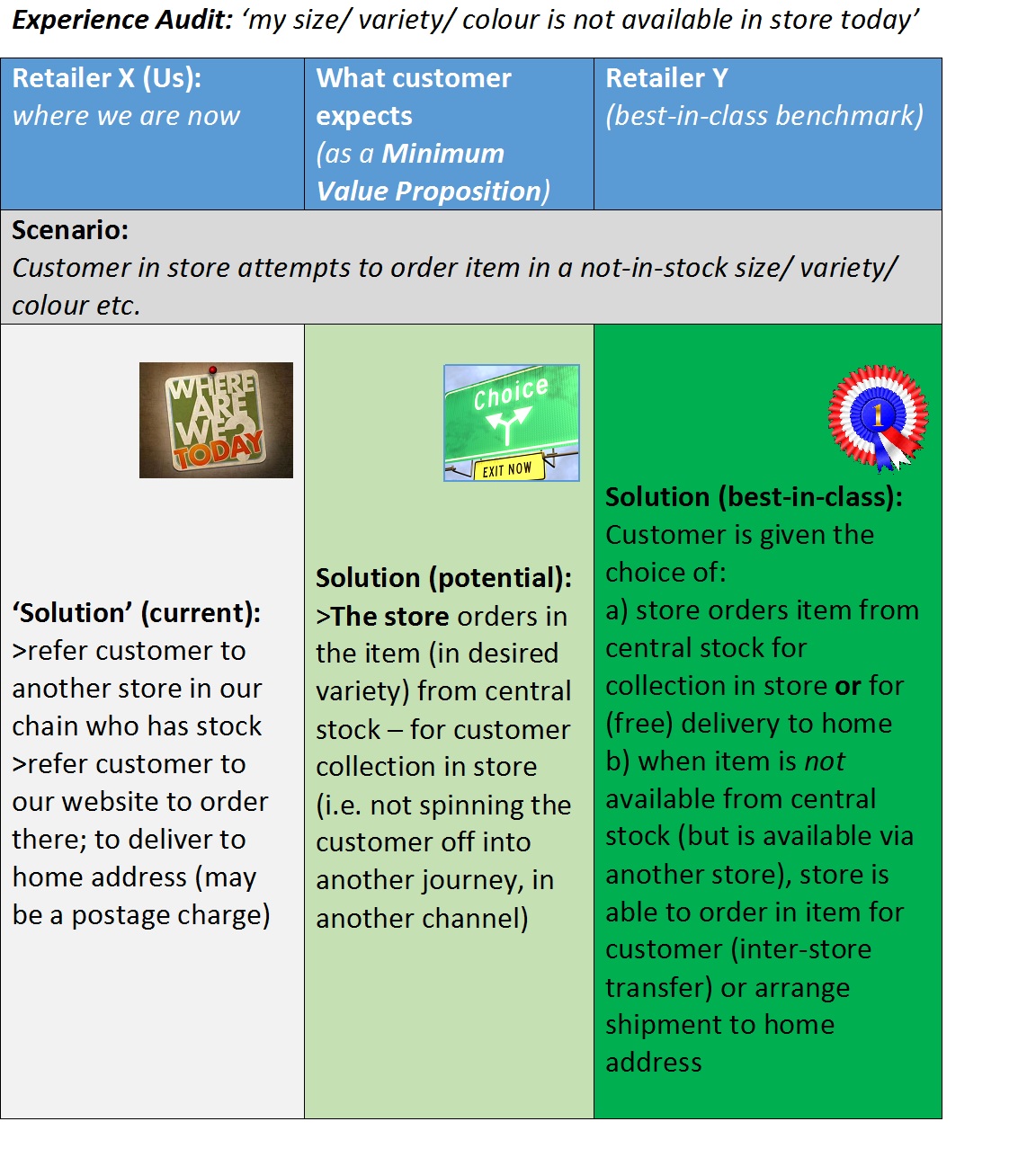
2. Assess the options (decide & implement):
Taking the outputs of this service audit (which highlights the experience gaps between both the ‘as is’ and ‘to be’ states (as well as versus the customer expectation and the competition), you can then assess, and define, the nature of the experience improvement you will look to implement to close the gap. Here you are looking for the strategic option that represents the best fit across your brand/ service promise, making a meaningful experience improvement as well as being implementable, given your available resources.
So, for this scenario, the chosen solution might be along the lines of:
‘we will implement a supply chain process change for phase 1 which will allow customers to order an out-of-stock item (to chosen store or to home with free delivery) from central stock inventory’.
Roadmap in the change and implement.
3. Audit (again):
Measure for the results of the change, to audit the impact via a ‘before-and-after’ lens.
So, for this type of service enhancement, it would be prudent to measure the ‘as is’ state for a fixed period prior to the process change (e.g. how many lost sales opportunities at what £ value in store across the estate/ what level of resulting poor CX) and then measure the same metrics in a corresponding fashion (for an equivalent period of time) once the process change has been made.
The differences of such CX enhancements, more often than not, should be clear-cut: as well as both CX and bottom-line enhancing.
So, does your brand have key ‘experience gaps’?
Do customer scenarios like this ring true with any elements of your brand and its service design for customers? If so, what are you doing to address them?
After all, in the Age of the Customer, it’s the brands who look to remove as many of these critical experience gaps as possible who will best serve today’s ever-more demanding customers. It is these brands, therefore, who will truly succeed.


Am honoured to have been amongst them. #idm #idmgrad
https://www.theidm.com/content-resources/press-releases/idm-graduation-ceremony-honours-over-600-marketers

IDM Graduation Ceremony, 2016
Ian awarded IDM Professional Diploma in Digital Marketing (Dip DM)
Feeling honoured: at my graduation today for my post grad digital diploma in digital marketing (Dip DM) @ the Royal Geographical Society #idm #idmgrad


Ian Finn talks about emerging and future digital trends
Interview on user experience with Ian Finn: UserZoom Conference, London, 2015
Interview on user experience with Ian Finn: UserZoom Conference, London, 2015
Watch the post conference interview with him, here:
https://www.youtube.com/watch?v=YTa-siLTSMo